
Independent vs. Concentrated Fieldwork: Which Path is Right for You?
By the Ripley Fieldwork Tracker team · Published March 28, 2025 · Reviewed July 20, 2026 · 4 min read
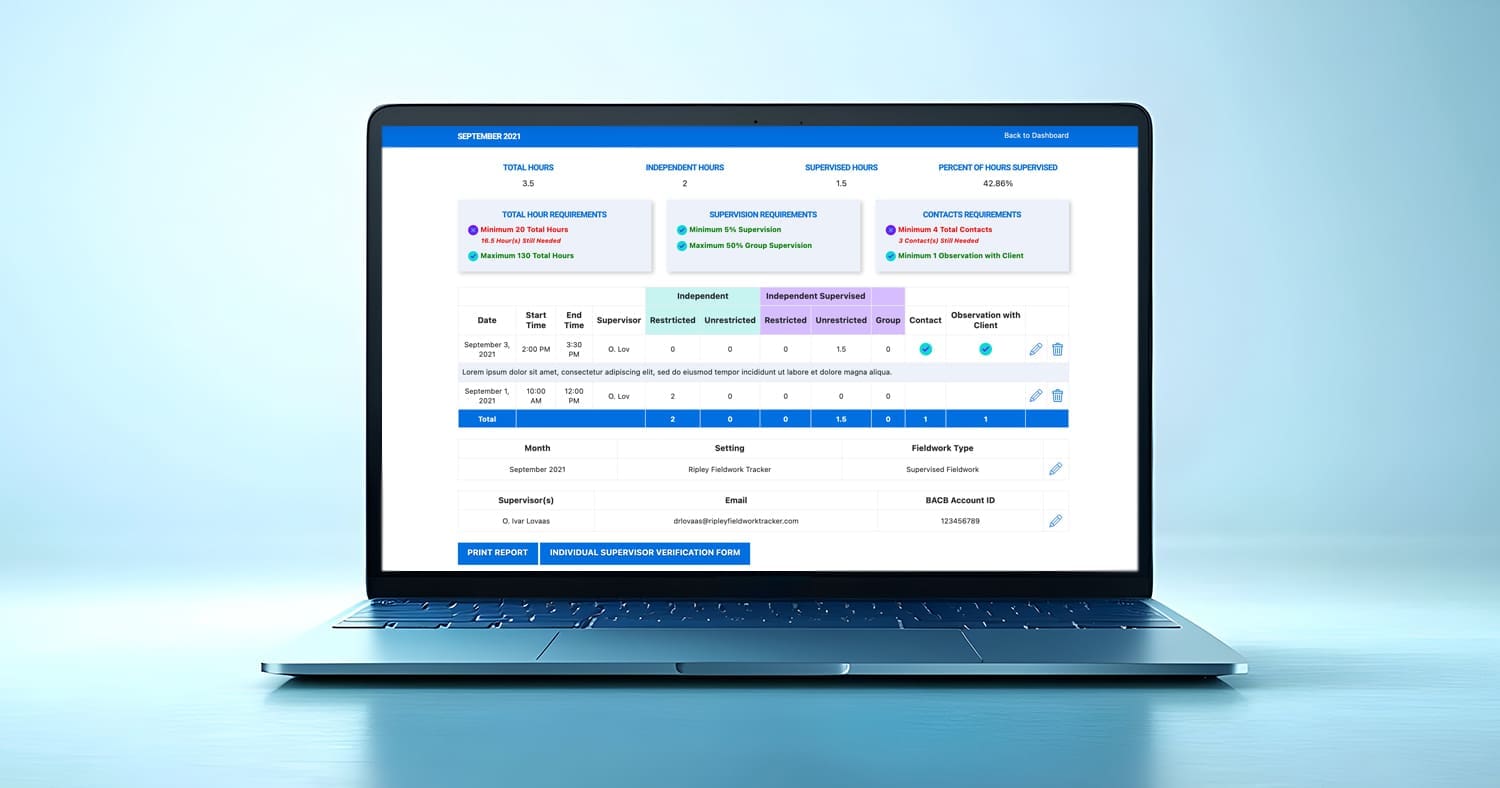
The BACB currently calls the two options Supervised Fieldwork and Concentrated Supervised Fieldwork. People still search for "independent fieldwork," but that older phrase usually means the standard 2,000-hour pathway. Concentrated fieldwork requires 1,500 hours and more monthly supervision. Both lead to the same BCBA certification when every requirement is met.
The practical choice is not simply 2,000 versus 1,500. Choose the pathway your supervisor and work setting can document every month. A concentrated month that misses its higher supervision requirement may not count as concentrated fieldwork.
The short comparison
| Requirement | Supervised Fieldwork | Concentrated Supervised Fieldwork |
|---|---|---|
| Total BCBA hours | 2,000 | 1,500 |
| Monthly supervision under current rules | 5% | 10% |
| Monthly supervision for applications in 2027 | 5% | 7.5% |
| Unrestricted activity minimum | 60% of total hours | 60% of total hours |
| Current monthly hour range | 20–130 | 20–130 |
| 2027 monthly hour range | 20–160 | 20–160 |
The 1,500-hour total reflects the higher supervision intensity. Concentrated hours are weighted by 1.33 when combined with standard hours. Do not apply that multiplier manually to create additional logged hours. Your documentation must identify the actual fieldwork type and actual hours accrued.
What "independent fieldwork" means now
Independent Fieldwork is not the name used in the current BCBA Handbook. The current standard pathway is Supervised Fieldwork. It may still feel independent because trainees often earn hours through employment rather than a university practicum, but it is still supervised work governed by a written contract and monthly requirements.
Use the current terms on contracts, logs, and verification forms. Accurate naming helps your records match the handbook and reduces confusion when you change supervisors or organizations.
When standard fieldwork is the better fit
Supervised Fieldwork is usually more realistic when your setting can provide consistent supervision but cannot sustain the concentrated percentage every month. It can also fit trainees balancing employment, graduate coursework, and family responsibilities.
The tradeoff is time. At 100 qualifying hours per month, 2,000 hours takes about 20 months before considering short months, pauses, or activities that do not qualify. The lower 5% supervision threshold can be easier to maintain, but every month still needs qualifying activities, observation, documentation, and a completed Monthly Fieldwork Verification Form.
When concentrated fieldwork is the better fit
Concentrated Supervised Fieldwork can shorten the total-hour requirement when your supervisor and organization can reliably provide the required oversight. It is a strong fit for structured training settings with protected supervision time and enough unrestricted activities.
Ask for evidence before selecting it:
- How many supervision hours will be available at your expected monthly pace?
- How will client observations be scheduled and documented?
- Will at least half of supervision be individual?
- Who monitors restricted and unrestricted activities?
- What happens during vacations, cancellations, or supervisor turnover?
If those questions do not have clear answers, the 1,500-hour headline may be less valuable than the predictability of standard fieldwork.
What changes in 2027
For people applying on or after January 1, 2027, the BACB's updated requirements raise the maximum monthly fieldwork total to 160 hours and reduce concentrated supervision from 10% to 7.5%. They also express client observation as cumulative minutes: 60 minutes for Supervised Fieldwork and 90 minutes for Concentrated Supervised Fieldwork per supervisory period.
Your expected application date determines which eligibility requirements apply. Review the current handbook and the BACB transition guidance with your supervisor rather than selecting rules month by month.
Can you combine the two fieldwork types?
Yes. The BACB allows both types to contribute toward eligibility when each month meets the requirements for the type claimed. Keep the records separated clearly. A month should not be labeled concentrated unless its supervision and documentation meet the concentrated standard.
Ripley lets you identify the fieldwork type for each month, see supervision percentages, and keep restricted and unrestricted totals visible. The fieldwork hours calculator can compare timelines, while the full BCBA fieldwork requirements guide explains the monthly rules.
A decision checklist
Choose based on the system you can sustain, not only the smaller number.
- Confirm that your supervisor is qualified under the current handbook.
- Put the supervision arrangement in writing before accruing hours.
- Estimate your realistic monthly qualifying hours.
- Calculate the supervision time required for both pathways.
- Confirm access to enough unrestricted activities.
- Decide how forms and supporting records will be reviewed each month.
- Recheck the plan if your application will occur in 2027.
Ripley is independent and is not affiliated with the BACB. Your supervisor is responsible for determining whether an activity and supervisory period meet BACB requirements.