
Key facts at a glance
- At least 60% of total hours must be unrestricted
- No more than 40% may be restricted
- For 2,000 hours: ≥1,200 unrestricted, ≤800 restricted
- Measured against total accrued hours, not each month
Why the split exists
The BACB wants fieldwork to build the analytic skills a BCBA actually uses, not just hands-on implementation. So it caps restricted (direct-treatment) hours at 40% and requires the majority, 60% or more, to be unrestricted behavior-analytic work, measured against your total accrued hours.
What counts as each
| Unrestricted (≥ 60%) | Restricted (≤ 40%) |
|---|---|
| Conducting assessments (FBA, skills, preference) | Running 1:1 discrete-trial or NET sessions |
| Writing and revising behavior-intervention plans | Implementing a client's treatment protocol |
| Graphing and analyzing client data | Collecting data during your own direct session |
| Training staff, RBTs, or caregivers | Delivering instructional procedures to a client |
| Program design, research, and supervision meetings | Hands-on prompting and reinforcement delivery |
How to plan the mix
Front-load unrestricted work rather than saving it for the end. If your role is mostly direct 1:1, ask your supervisor for assessment, graphing, and training opportunities early.
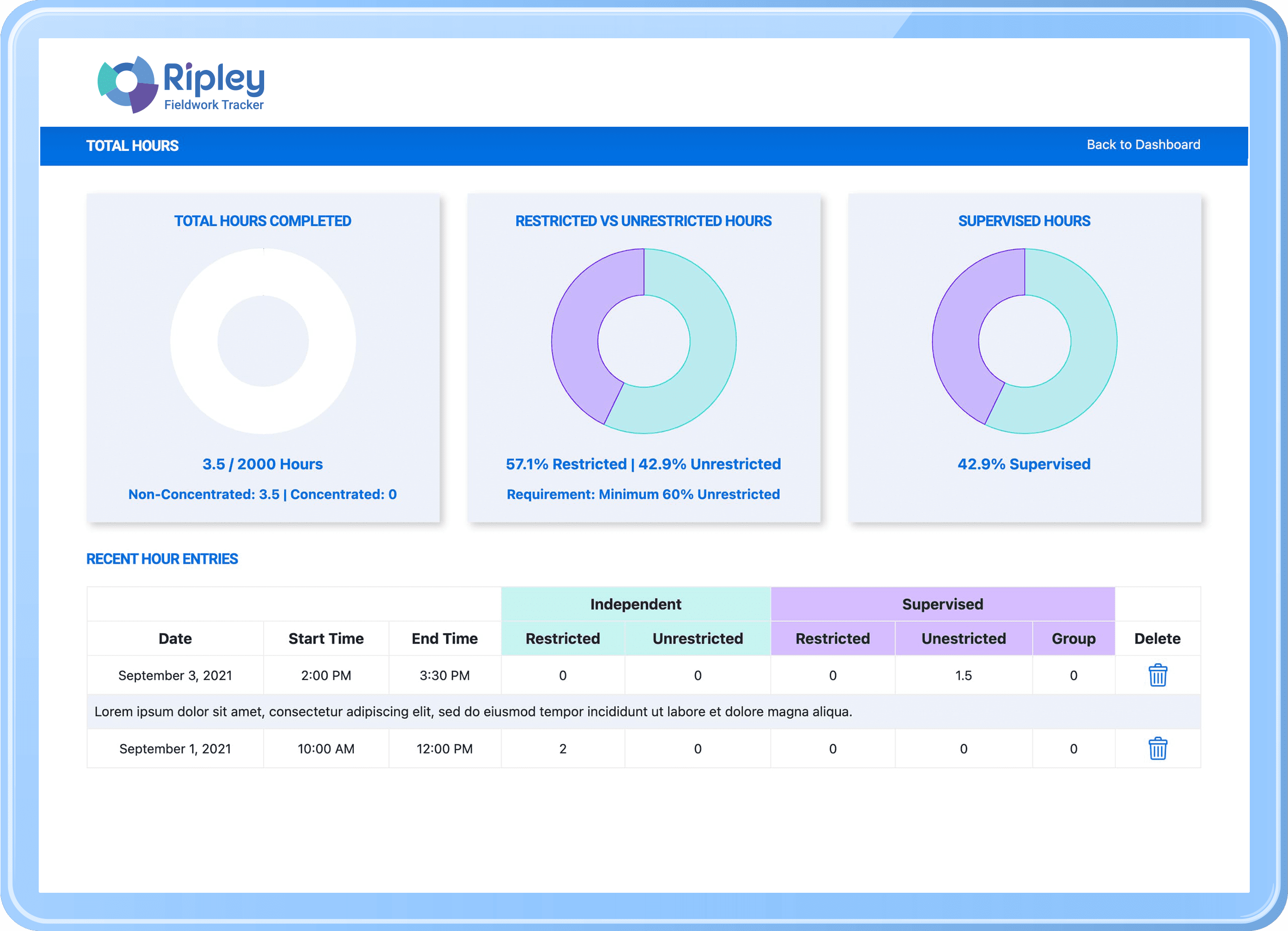
The fieldwork hours calculator shows your target unrestricted total, and the full requirements guide covers every other rule.
Keep your 60/40 split honest
Ripley separates restricted and unrestricted hours automatically as you log.
Track your split freeRestricted vs unrestricted FAQ
What is the 60% unrestricted rule?
What counts as unrestricted hours?
What counts as restricted hours?
Is the 60/40 split monthly or total?
Primary sources
The 60% unrestricted requirement and activity definitions were reviewed against BACB publications.
- [1]BCBA Handbook · Behavior Analyst Certification Board, accessed Jul 20, 2026
- [2]2027 BCBA Eligibility Requirements · Behavior Analyst Certification Board, accessed Jul 20, 2026